

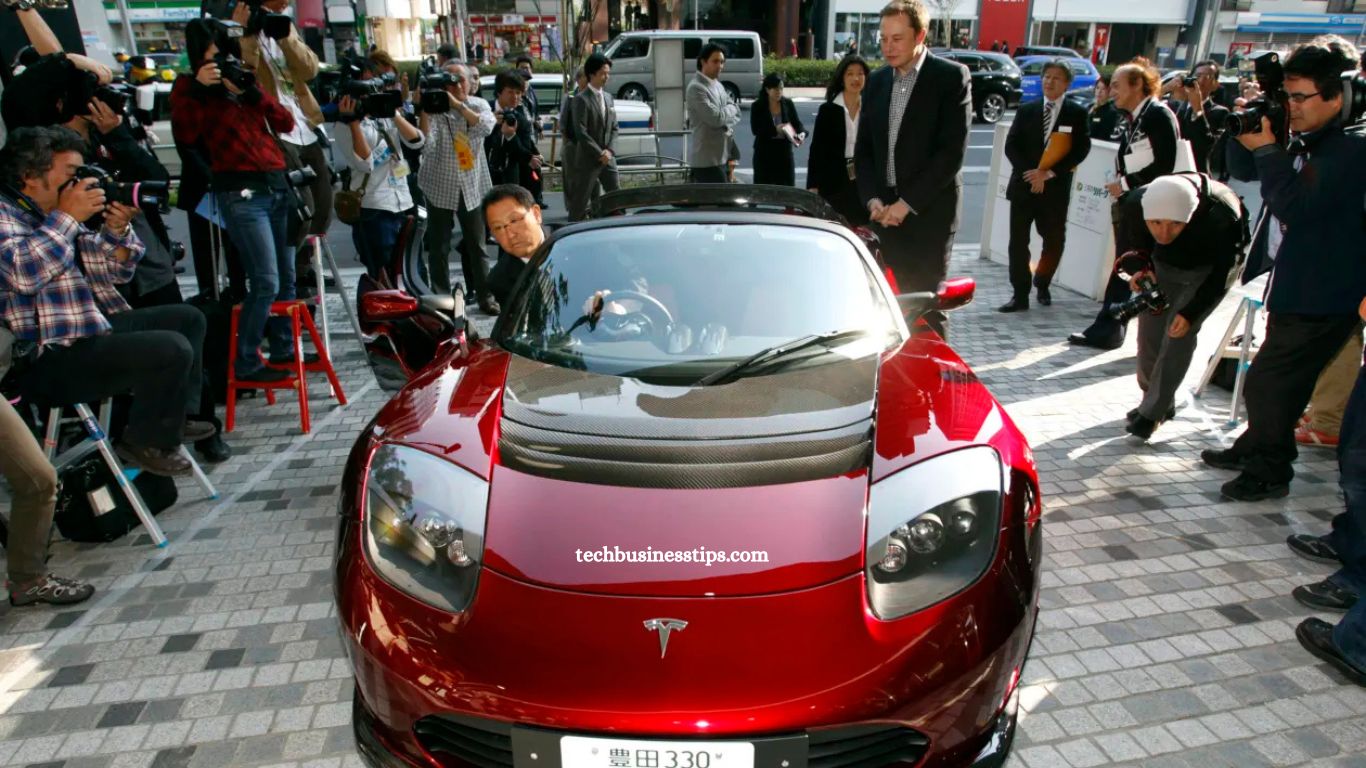
Tesla’s long-awaited next-generation Roadster is back in the headlines, thanks to new comments from CEO Elon Musk. Nearly eight years after he first teased the updated model, Musk is once again assuring fans that the resurrected sports car is on the way—this time with the promise of a public demo before the year ends.
- A New Promise—But Few Details
- Frequently Asked Questions
- When will the new Tesla Roadster be unveiled?
- What makes the next-generation Roadster special?
- Why has the Roadster been delayed for so long?
- Can I still reserve a Roadster?
- Who are Tesla’s competitors in the electric supercar market?
- What did Elon Musk say about the Roadster’s reveal?
- Does the Roadster affect Tesla investors?
- Conclusion
The Roadster has always occupied a special place in Tesla’s story. The original version, released in 2008, marked the company’s first production vehicle and set the foundation for Tesla’s rise in the electric-vehicle market. When Musk revealed plans for a next-gen Roadster in 2017, excitement was immediate. Tesla positioned it as a high-performance electric supercar capable of rewriting the rules for EV engineering. Since then, the car has slipped into one of the company’s longest and most lingering delays.
A New Promise—But Few Details
In a wide-ranging conversation with podcaster Joe Rogan, published Friday, Musk revisited the Roadster topic yet again. Rogan pressed him on timing and whether the long-delayed model would finally see the light of day. Musk answered with confidence but remained tight-lipped on specifics.
“I can’t do the unveil before the unveil,” he said, reiterating that the Roadster could become “the most memorable product unveil ever.” It’s a bold claim, but not unusual from a CEO known for dramatic presentations and ambitious engineering targets.
Musk said Tesla is aiming to showcase the updated Roadster “hopefully before the end of the year.” While that statement avoids firm commitments, it still represents one of the clearest timelines Musk has offered in several years.
Read More: Saudi Arabia Ramps Up Its Bold Push to Become a Global AI Leader
High Expectations and High Stakes
The renewed hype comes at a time when the Roadster is more than a halo product; it’s a symbolic one. For Tesla supporters, the next-gen Roadster represents unfinished business—proof that the company can still deliver on its most ambitious promises. For critics, it highlights Tesla’s pattern of introducing big ideas before they’re technically or operationally ready.
Tesla has faced increasing scrutiny over production delays, pricing adjustments, and growing competition from global EV manufacturers. A successful Roadster unveiling could help reaffirm the company’s innovative reputation and refocus attention on its engineering capabilities.
More importantly, Musk faces a critical shareholder vote next week. Investors will decide whether to approve a massive pay package that could award him nearly $1 trillion in Tesla stock, increasing his ownership stake to around 25% if key performance milestones are met. A high-profile product tease—especially one tied to Tesla’s performance identity—could help sway sentiment during a pivotal moment for the company.
The Sam Altman Factor
Musk’s timing didn’t go unnoticed. His renewed Roadster commentary arrived just a day after a social media post from Sam Altman, CEO of OpenAI and Musk’s former collaborator. Altman revealed on X that he attempted to cancel his Roadster reservation from 2018 and request a refund. His email, he said, bounced back.
“I really was excited for the car!” Altman wrote. “And I understand delays. But 7.5 years has felt like a long time to wait.”
The post added fuel to an already tense rivalry. Musk co-founded OpenAI in 2015 but later split from the organization and has since launched xAI, a direct competitor. With lawsuits and public disputes escalating between the two tech leaders, even small interactions tend to draw major attention. Altman’s public complaint about his Roadster refund brought new visibility to the delay—exactly the kind of narrative Musk would want to counter.
Industry analysts have noticed the timing. Patrick George, editor-in-chief at InsideEVs, told CNBC that the Roadster “has been MIA for years” and suggested Musk may be talking about it again partly because Altman’s comment resurfaced the delay at an inconvenient moment.
A History of Delays
The next-gen Roadster has been one of Tesla’s most consistently delayed products. Since its original announcement in 2017, the model has faced shifting timelines, changing specifications, and growing skepticism. Even notable tech figures have shared their struggles with the reservation process.
Earlier this year, popular tech reviewer Marques Brownlee described the drawn-out process of canceling his Roadster reservation and securing a refund. His story echoed the frustrations of long-waiting customers who placed deposits years ago in hopes of getting early access.
Tesla originally positioned the Roadster as a record-breaking supercar, capable of extreme speed and acceleration. At one point, Musk even suggested optional “SpaceX package” thrusters that would enhance performance beyond anything on the market. While the company has not shared updated specs, expectations remain high.
When released, the Roadster would compete with high-end, low-volume electric hypercars, including BYD’s YangWang U9 Xtreme, currently recognized as the world’s fastest production EV. Whether Tesla can surpass that benchmark remains unknown, but Musk’s hints suggest the company is aiming for something headline-worthy.
A Potential Turning Point
Tesla is navigating a shifting EV landscape. Global competition is rising rapidly, pricing pressure has intensified, and the company has faced internal restructuring as it adjusts its long-term strategy. The Cybertruck launch reinvigorated public interest late last year, but the company still needs a strong product story to maintain momentum.
The Roadster offers that potential spark. It may not become a mass-market vehicle, but its halo effect is powerful. A dramatic prototype demo could reinforce Tesla’s innovation narrative and showcase the company’s engineering talent at a moment when public perception matters more than ever.
Still, Musk’s promises come with caution. Tesla’s history shows that timelines can slip, and product demos don’t always translate into immediate production. Fans and investors have learned to balance enthusiasm with skepticism. Musk, meanwhile, seems confident that the Roadster will be worth the wait.
Frequently Asked Questions
When will the new Tesla Roadster be unveiled?
Elon Musk has indicated that Tesla aims to showcase the updated Roadster “hopefully before the end of the year.”
What makes the next-generation Roadster special?
It is a high-performance, low-volume electric supercar designed to push the limits of speed, acceleration, and EV engineering.
Why has the Roadster been delayed for so long?
Since its 2017 announcement, production has faced shifting timelines, design updates, and Tesla’s focus on other major projects.
Can I still reserve a Roadster?
Yes, reservations are still possible, but some early customers have experienced challenges with cancellations or refunds.
Who are Tesla’s competitors in the electric supercar market?
Competitors include vehicles like BYD’s YangWang U9 Xtreme, currently one of the fastest production electric cars.
What did Elon Musk say about the Roadster’s reveal?
Musk claimed it “has a shot at being the most memorable product unveil ever” but didn’t share technical details.
Does the Roadster affect Tesla investors?
Yes, the Roadster launch could influence investor sentiment, especially as Musk seeks approval for a massive pay package tied to Tesla’s growth.
Conclusion
The Tesla Roadster remains one of the most anticipated electric supercars, symbolizing innovation, performance, and Tesla’s ambitious vision. With Elon Musk promising a potential year-end demo, excitement is building among fans, investors, and the automotive industry alike. While production timelines remain uncertain, the Roadster’s return to the spotlight reinforces Tesla’s commitment to pushing the boundaries of electric vehicle technology.